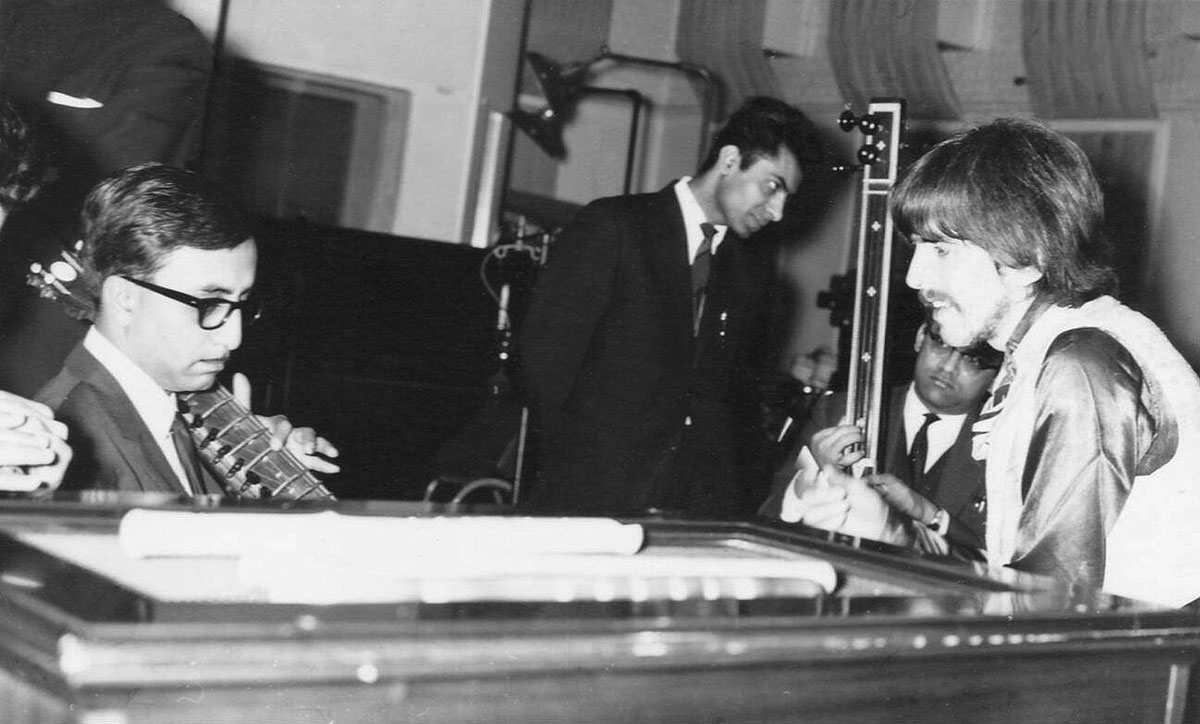
A sonic bridge between East and West, capable of revolutionising the sound of pop music forever. From the first experiment on Norwegian Wood to the mystical heights of Sgt. Pepper, the sitar and the instruments of Indian music accompanied George Harrison through one of the most fascinating musical transformations in the Beatles' history.
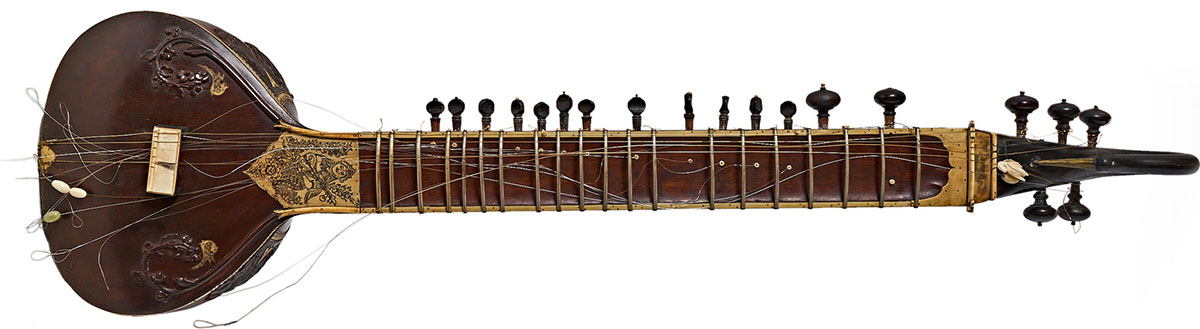
The sitar is a stringed instrument from the North Indian classical tradition, renowned for its hypnotic and resonant tone. It features a soundbox made from a dried gourd (tumba), a long neck with movable brass frets and a distinctive bridge (jawari). Much of its unmistakable sound comes from its numerous sympathetic strings (taraf), which vibrate through resonance alongside the main melody strings.
George Harrison's first close encounter with Indian musical instruments came in the spring of 1965, at Twickenham Film Studios, during the filming of Help!. On the set of the Indian restaurant scene, George became fascinated by the instruments being played by the musicians present. A few months later, during the Beatles' American tour, David Crosby of the Byrds told him about Ravi Shankar's music, and George began listening to his records.
Back in London, George went to Indiacraft, a shop on Oxford Street, and bought his first sitar: an inexpensive model of rather modest quality. Harrison took it to Abbey Road and, in October 1965, worked out John's vocal melody by ear on Norwegian Wood (This Bird Has Flown). The approach in the studio was pioneering: he even broke a string, and no one knew how to replace it, forcing them to call the Asian Music Circle in London for help. Despite everything, it was a landmark moment: Norwegian Wood, released on Rubber Soul, brought the sitar into the heart of Western pop music.
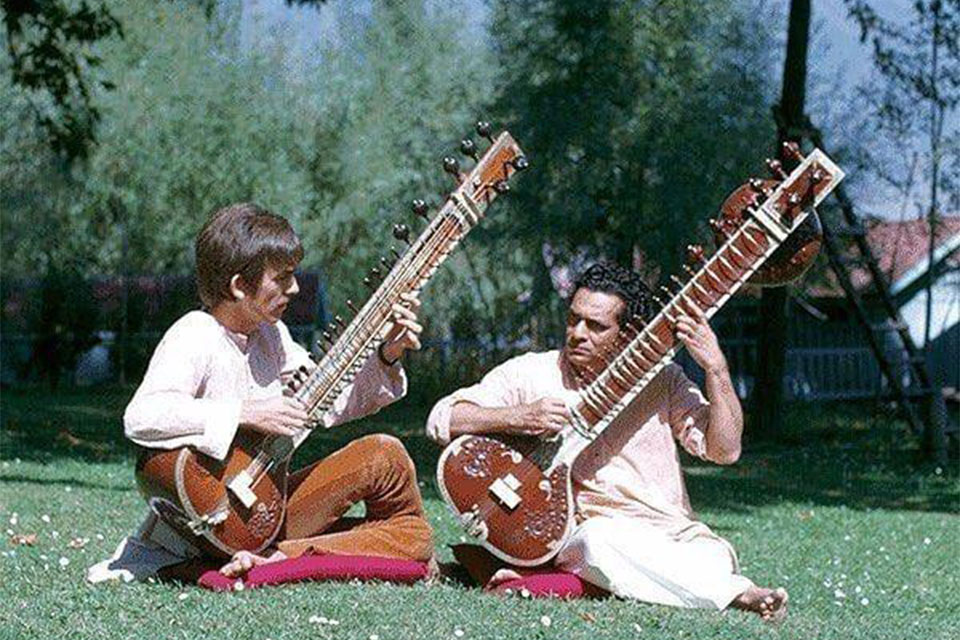
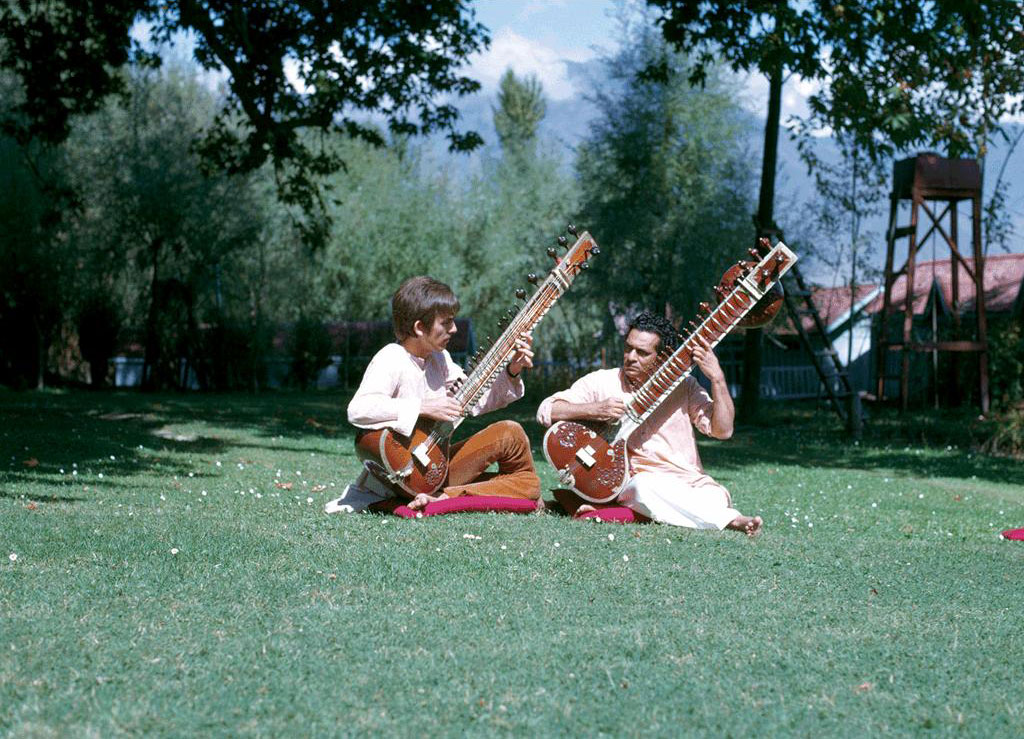
After recording Love You To in April 1966, with tabla player Anil Bhagwat, Harrison finally met Ravi Shankar in London in June of the same year and received his first guidance from him. Just a few weeks later, during the Beatles' first trip to India, he bought a new instrument from the historic Rikhi Ram & Sons shop in New Delhi. In September, George returned to India with Pattie for around six weeks, studying the sitar with Shankar and immersing himself in Indian culture and spirituality. It was an experience that would profoundly change his approach to music.
The leap in quality was immediately apparent, reaching its peak in 1967 on Sgt. Pepper with the mystical masterpiece Within You Without You. The exploration continued with The Inner Light, whose instrumental backing track was recorded in Bombay in 1968 with an entire ensemble of Indian musicians.
Over time, Harrison came to understand the incredible discipline required to become a true sitar master and humbly decided to step back and refocus on the six-string guitar. His experience with Indian music, however, would change forever the way he listened to and thought about music.
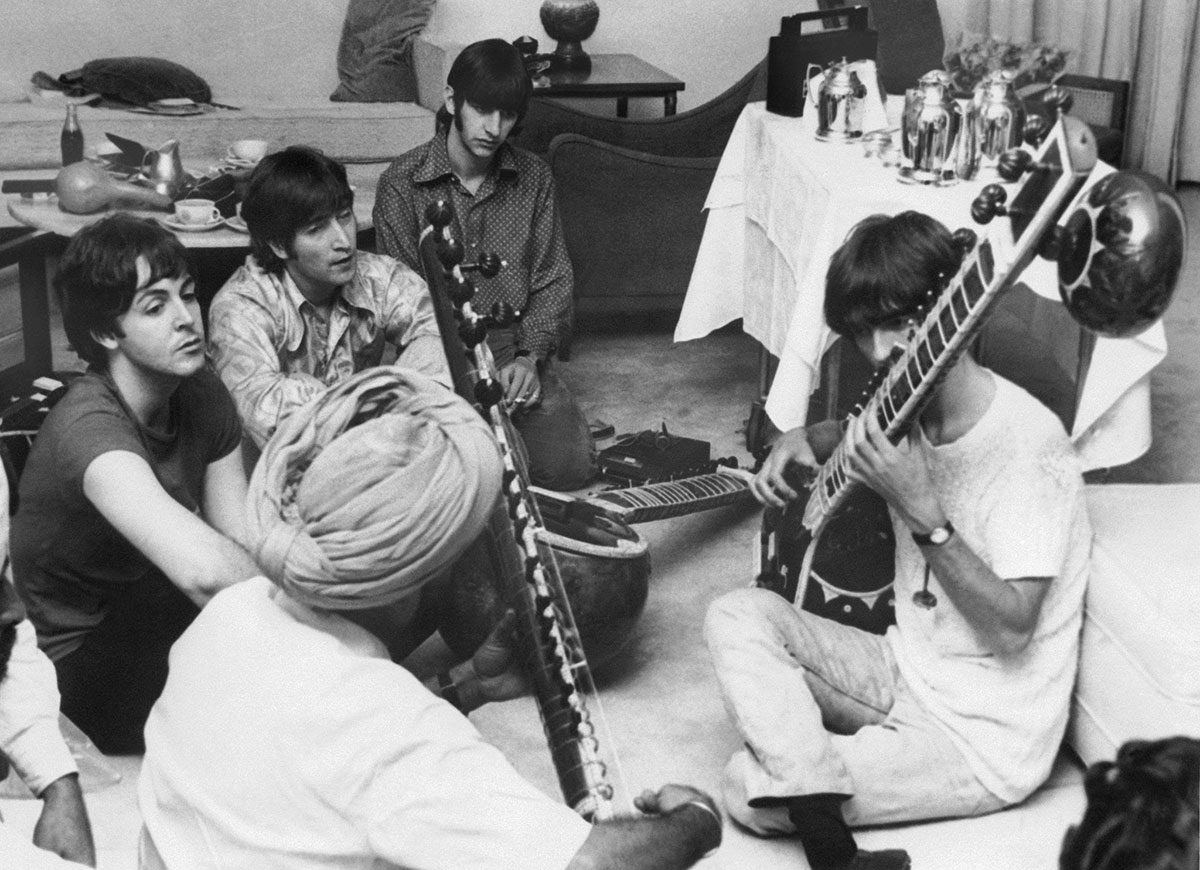
As George's fascination with India grew, many other instruments from the Indian musical tradition found their way into Abbey Road. Some were played directly by George Harrison, while others were played by Indian musicians brought in to collaborate on the recordings.
The sitar at the top, made by Kanai Lal & Brother, is the exact instrument George Harrison bought from Indiacraft in 1965 and used to record Norwegian Wood. During his honeymoon with Pattie Boyd in Barbados in February 1966, Harrison gave it to his friend George Drummond after receiving a better sitar. Drummond kept it for decades, until it was eventually sold at auction by Nate D. Sanders Auctions.